

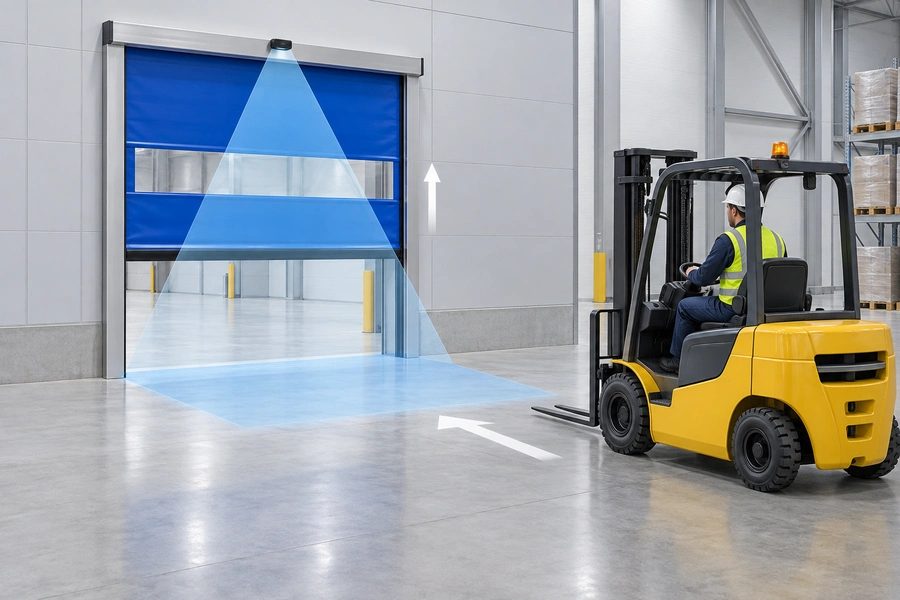
Hands-Free Access For Busy Openings
Automatic roll-up vinyl doors have two operational types - sensor-driven doors that detect approaching movement when opening, or a connected system that sends a signal for opening. People can move through the opening without the need to reach out for a button or by remote.
Begin by assessing the activity that occurs in the area and the traffic through the opening - forklift movement, carts, people, or items moving on a conveyor. We can suggest door types, controls and inspect site details to craft your application.
Visit our page on roll-up vinyl door options for room configurations, separations and daily access.
How Automatic Vinyl Doors Work
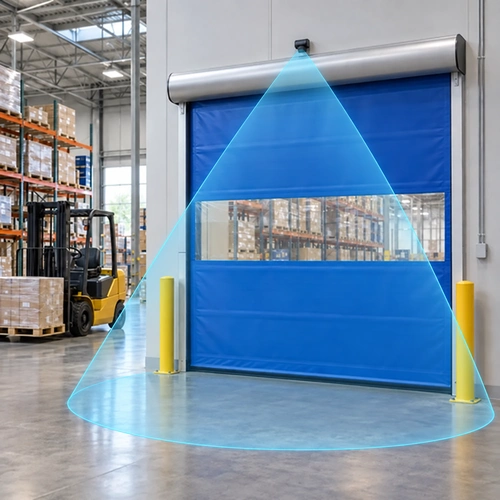
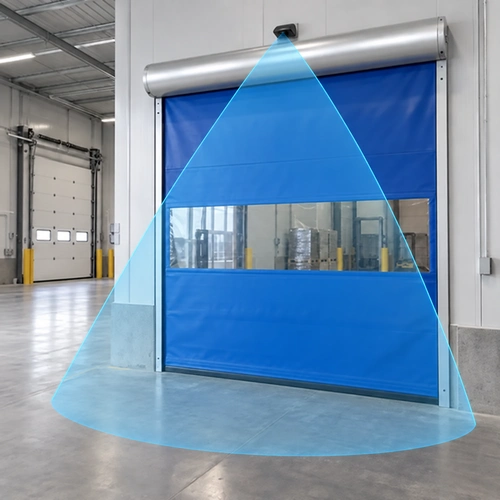
Approach, Detect, Open
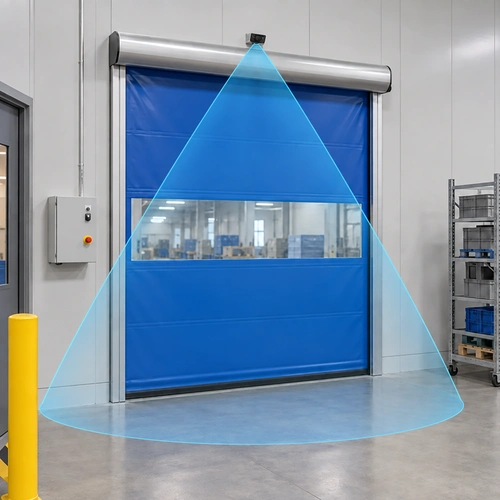
An installed sensor on the vinyl door monitors a specific area on the front doorway. When it spots approaching movement, the sensor sends a control signal for the door to open.
This is how the vinyl door operates:
- Traffic moves toward the detection area.
- The door controls receive the signal to open.
- The motor then raises the vinyl curtain.
Determine the specific area in the opening doorway where the detection of movement is needed. Validate the traffic flow in the area and the system used in managing the movement of people, forklifts, nearby cross traffic, and unloading at the opening.
Opening detection and protection are separate functions. Determine the required presence sensors, photo eyes or reversing devices included in the complete door system.
Choose What Triggers Your Door
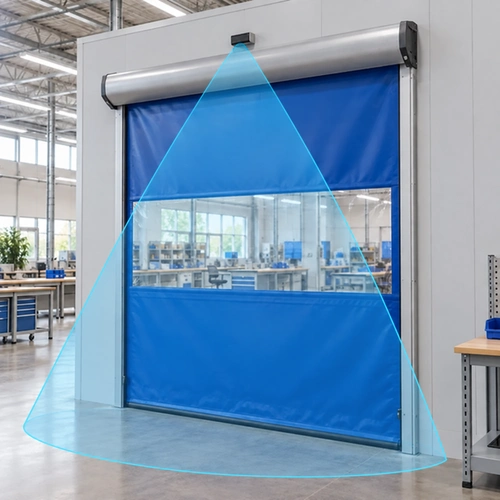
Motion Sensors For Traffic
Motion sensors offer hands-free access. Begin by defining movement of people and vehicles approaching the opening. The correct motion sensor can efficiently send the opening request as traffic advances.
In choosing a sensor for the curtain, consider mounting height, approach direction and nearby aisles. Inquire on the type of sensor if this can distinguish between approaching traffic versus vehicles or people who are only passing by the opening.
Each sensor has different detection capabilities. Choose the appropriate sensor and door controls based on the site specifications.
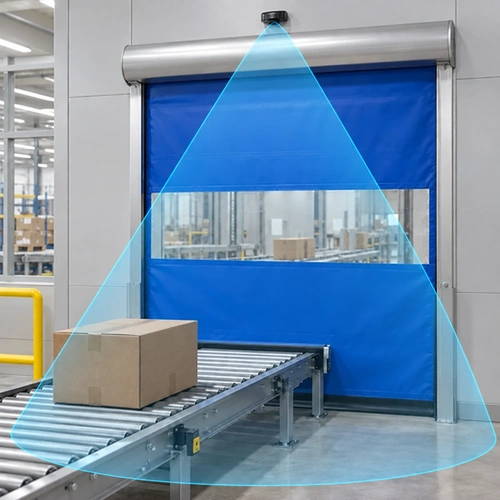
Photo Eyes And PLC Signals
Photo eyes and PLC controller have special functions that can be incorporated in the automatic roll-up vinyl door. A photo eye is capable of detecting a product at a set point. A PLC is the controller that runs equipment and is responsible for sending opening requests.
Automatic opening follows a technical flow and it is important that your integrator mention the sequence, required signals, and fault response. Before ordering, make sure that the specifications are compatible with the system. Usually, opening requests by itself does not guarantee that the door will be fully opened or that equipment can function.
As a safety protocol, we suggest that your team review our automated machine safety doors section. Included in this page is information about guarding a machine or a robot cell.
Automatic, Motorized, Or High Speed?
Match The Door To The Job
Below are specifications of an automatic roll-up vinyl door that is useful in determining the type of door that is compliant to your needs.
- Automatic: A signal triggered by a sensor or equipment requests the opening of the door without the need to press a button.
- Motorized: A motor governs the movement of the door, but there is the possibility that a person may still use a switch or remote.
- Determine the speed and cycles per hour of traffic movement since the door is capable of high-speed opening.
- Vinyl: The curtain is made of flexible material and capable of separating areas while still accessible. Determine factors for the right temperature, drafts and exposure.
Need Security Or Machine Guarding?
Considering security concerns, a flexible vinyl curtain is not an appropriate option to be used for a forced-entry barrier. Inquire about metal security doors for more protection and theft deterrence.
Discuss first with your safety team regarding concerns on machine guarding as a separate requirement. Careful consideration should be made regarding safety hazards. Review guarding system and interlocks with the team prior to choosing a door.
Common Applications
Automatic vinyl doors can facilitate movement and traffic in your site by automated openings. Begin by making a study based on the tasks we have outlined so you can determine the door specifications that complement your needs.
Warehouse Forklift Routes
When movement involves forklifts, plan the detection area surrounding the forklift route and its widest load. Please be aware that nearby cross traffic can cause unintended openings. Provide a photo and define the approach direction so that the correct sensor can be recommended.
Distribution Centers
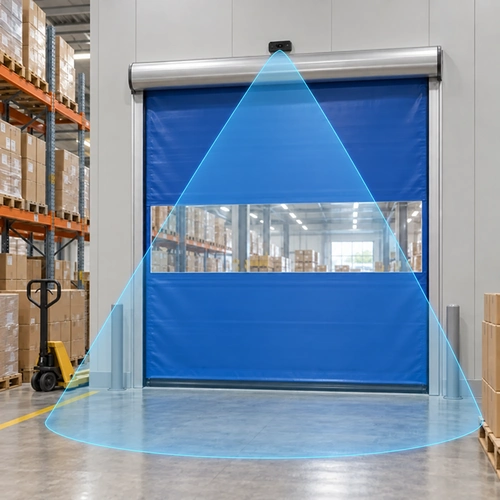
If the requirement is for a distribution center, we understand that this kind of daily operation can reach peak traffic movement. Come up with estimates on openings during peak hours and inform us if loads arrive in groups. This additional information helps us to determine if the door can handle such operations and also confirm the required opening speed.
Production Area Separation
In production areas, a vinyl curtain can provide separate work areas while maintaining clear and accessible paths. Kindly include wall support, available headroom, and drafts at the opening. Determine what areas need separation before choosing the curtain.
Cart And Pedestrian Routes
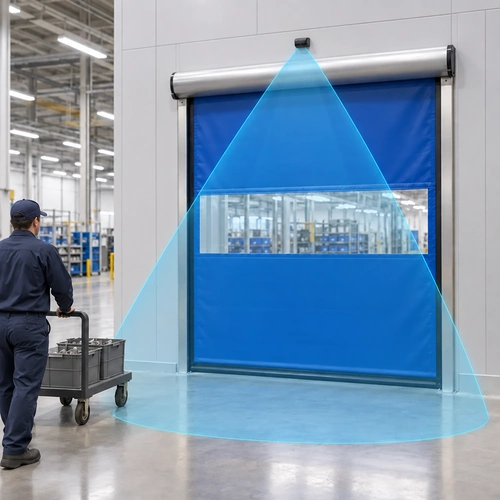
There are different sensors for specific situations. Sensors vary in use from vehicles to people pushing carts. Inform us the type of movement, whether by vehicles or pedestrians and the speed of traffic in which these movements progress. Consider the detection and closing protection of a person with a cart or people stopped at the doorway.
Conveyor Transfer Openings
When the situation includes a conveyor, determine when the load reaches the door and what signals the movement of the conveyor. Discuss with your integrator to confirm the opening signal, door position feedback and fault response. Inspect the tallest product and secure clearance.
Packaging Area Access
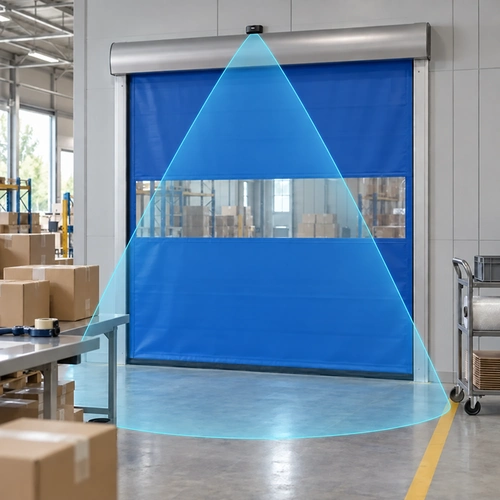
In a packaging area, determine the full load, wrap, handles, and other items that may overhang on a cart or pallet. Provide allowance for the load to pass through without touching the guides. Mention cleaning or temperature requirements in your quote.
Interior Dock Staging
For interior dock staging, an interior vinyl door can separate staging from a connected work area. Placement of sensors need to be planned so we suggest that you discuss with your team regarding drafts and nearby docking activity. Metal security door requirements can be discussed in a separate session as we focus on the vinyl traffic door.
Equipment-Linked Access
Doors with sensors open in different ways. Some by equipment signal or when traffic approaches the door. Determine what process is to be used and who holds the controls. Study and confirm signal compatibility, power, and describe the full sequence of the opening before placing your order.
Pricing And Warranty
Budget Pricing (USD)
Automatic Vinyl Doors: $4,000–$15,000
The stated amount is the base price used in the early stage of the quote. Size opening, controls, and other requirements will influence price variation.
Determine what specifications should be included in the sensors, wiring, installation, freight, and taxes.
Warranty Coverage

Warranty terms for our vinyl doors are the same as our automated machine doors.
We provide written warranty upon request if you require it together with your quote. Kindly mention the coverage period, covered parts, exclusions, and other careful considerations for the selected door and controls.
Automatic Vinyl Door Questions
We have provided a walkthrough beginning with what triggers the door, what passes through it, and how often the door will run.
What Makes A Vinyl Door Automatic?
In an automatic vinyl door, a sensor or a connected control system sends a signal to request opening. There is no need to press a button or use a remote for each cycle. In this regard, kindly confirm the trigger and closing sequence that you prefer in your quote.
Is A Motion Sensor The Same As A Photo Eye?
The answer is no. By definition, a motion sensor detects movement in an area. A photo eye detects an object or an interrupted beam in a location setting. Either device offers a different function in the door system and is dependent on the type of wiring and operation.
Can The Door Work With A PLC?
Discuss with your integrator in defining the opening request, door-position feedback, closing conditions, and fault response. Kindly mention what controller you use and the intended function of the door. Please ensure compatibility before ordering.
Will The Door Close Automatically?
It depends on the controls and protection devices selected. Determine how the door closes and how it responds to a person or load in the opening. It is better not to rely on a simple timer and assume that this will provide the complete solution.
Does Automatic Mean High Speed?
No, it does not. Automatic describes the manner the door is triggered. Speed, on the other hand, explains how quickly it moves. Please provide information on your busiest cycles per hour and length of shift so we can come up with the correct specifications for the motor and the door.
Can A Vinyl Door Secure My Building?
If security is a concern, a flexible vinyl curtain will not be sufficient since its purpose is to provide access and separation and not a forced-entry barrier. Metal doors are suitable in providing the much-needed protection and will address your security concerns. Inform us if theft protection or a security rating is required so we can recommend the appropriate metal door.
How Much Does An Automatic Vinyl Door Cost?
$4,000 to $15,000 is the range and is used at the initial planning stage. You may request a quote for your opening and closing requirements. Include the final scope, installation, electrical work, freight, and taxes with the quote.
What Should I Send For A Quote?
Include in your quote the opening width and height, headroom and side clearance, photos of the site, usable power, and traffic details. Also mention your required opening trigger, cycles per hour, and any PLC or equipment information.
Related Products

Powered Roll Up Vinyl Doors

Manual Roll Up Vinyl Doors

High Speed Roll Up Vinyl Doors
Side-To-Side Roll Up Vinyl Doors
Salt Storage Roll Up Vinyl Doors