

Key Takeaways
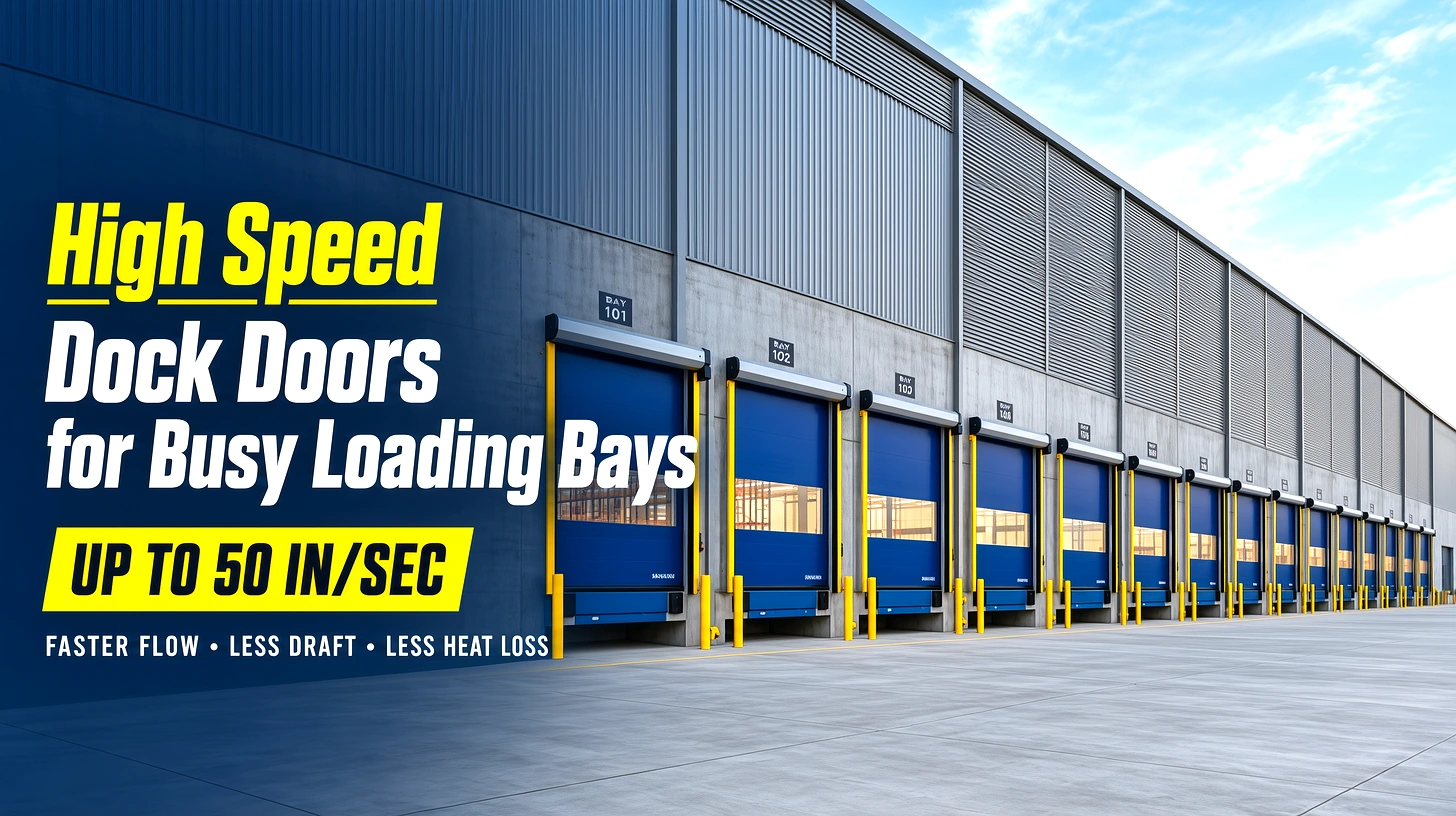
- A high speed dock door is a fabric roll-up door that opens fast, often up to 50 inches per second, so traffic keeps moving and the opening stays closed the rest of the time.
- Fast cycling cuts drafts, dust, and heat loss at busy bays, and it shortens the wait for forklifts and carts.
- These doors suit high-traffic openings: loading docks, freezer and cooler lines, dividing walls, and clean production areas. See the full range of high speed roll-up vinyl doors.
- The right pick depends on opening size, traffic count, and whether the door is interior or exterior. Speed alone does not decide it.
Updated: August 2026

What Is a High Speed Dock Door?
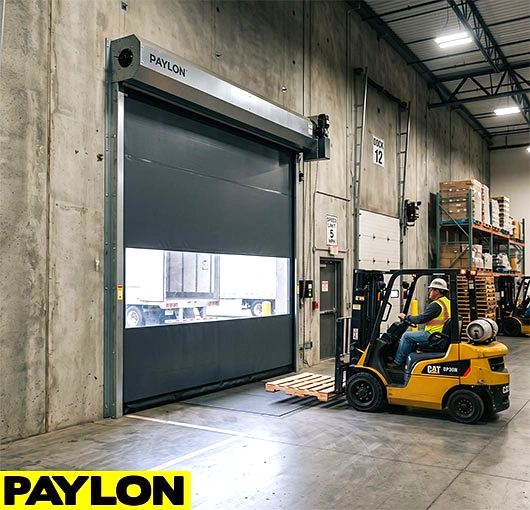
A high speed dock door is a fabric roll-up door that opens and closes far faster than a standard door, so it spends most of the day sealing the opening instead of sitting open.
Most industrial doors move slowly. A manual door or a basic motorized door creeps up at a walking pace, so people prop it open to save time. That open door lets in cold, heat, dust, and noise all shift long.
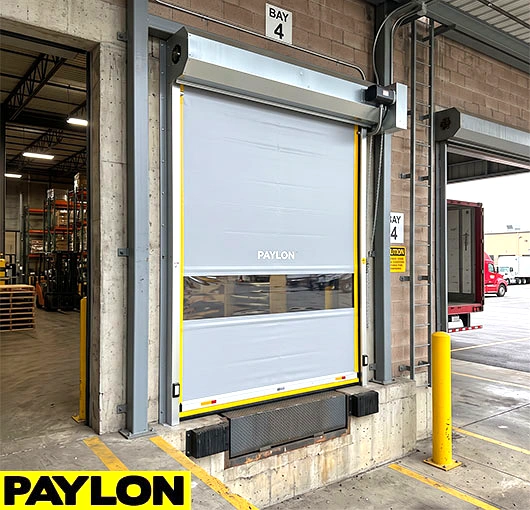
A high speed door fixes that. It rolls up in a few seconds, lets the forklift or cart through, then drops back down on its own. You get access when you need it and a closed opening the rest of the time. Our high speed vinyl roll-up doors use side-mounted motors that move the curtain up to 50 inches per second.
The curtain is double-coated, tear-resistant vinyl-coated nylon, not steel slats. That keeps the door light, quiet, and quick, and it makes custom sizing simple.
How Fast Should a Dock Door Open?
Match the speed to the traffic, not to a spec sheet. The busier the opening, the more speed pays off.
A door crossed a few times an hour does not need to be fast. A door crossed hundreds of times a shift does, because every second of wait adds up across a year.
PAYLON builds three tiers so you are not paying for speed you will not use. A manual vinyl roll-up door suits low-use openings. An in-tube motorized door moves near 12 inches per second for medium use. A side-mounted high speed door reaches 20 to 50 inches per second for the busiest bays.

What Speed and Cycle Rating Does Your Bay Need?
Count how often the opening is used, then size the motor and hardware to that number with headroom to spare.
Cycle rating is how many open-and-close trips the door is built to handle before major service. A door on a quiet storeroom and a door on a main shipping dock live very different lives.
Doors sit at the edge of aisles and dock openings, and OSHA calls for safe clearance at loading docks and doorways in its materials handling standard. Speccing the opening size and swing path early keeps the door out of the traffic path.
Give us the traffic count, the opening size, and whether the door is inside or exposed to weather. Those three answers point to the right speed tier and the right hardware faster than any brochure.
High Speed vs Standard Roll-Up Doors, Side by Side
High Speed vs Standard Roll-Up Doors
| Feature | High Speed Door | Standard Roll-Up Door |
|---|---|---|
| Opens fast (20 to 50 in/sec) | ✓ Yes | ✗ Around 12 in/sec or by hand |
| Closes on its own | ✓ Auto-close | ✗ Usually manual |
| Good for high traffic | ✓ Built for it | ✗ Slows the line |
| Blocks drafts and dust well | ✓ Stays shut | ✗ Often left open |
| Lower upfront cost | ✗ Costs more | ✓ Cheaper to buy |
| Best use | Busy docks and interior high-traffic openings | Low-use openings and tight budgets |
The Right Door for How Your Bay Actually Runs

Why Are High Speed Doors Better Than Standard Roll-Up Doors?
High speed doors win at busy openings because speed and auto-close keep the barrier shut, while a slow door gets left open and stops doing its job.
The problem with a slow door is human nature. If a door takes 15 seconds to raise, a driver crossing that opening 40 times an hour will leave it up. Once it is up, it protects nothing.
A fast door removes the reason to prop it. It opens before the forklift reaches it and closes right after. Industry groups like the Door and Access Systems Manufacturers Association track this class of product as high performance doors, and their technical data sheets cover speed, energy, and safety terms in plain language.
The payoff shows up in three places: lower heating and cooling loss, cleaner air on the production side, and less time lost waiting on the door.
What Our Customers Say
"Before we put a high speed door on our main shipping dock, forklift drivers were waiting on a slow roll-up door 40 to 50 times an hour, and the back of the building stayed cold all winter. The new door opens in under 3 seconds, so the drivers stopped stacking up, and our heating cost for that bay dropped about 22 percent the first quarter. It paid for itself faster than we planned."
Marcus Delgado, Facilities Manager, Cedarline Distribution Co.
Which Features Matter Most on a High Speed Dock Door?
The features that count are the ones that keep the door running and keep people safe, not the ones that only look good in a catalog.
A door that is down and fast is worth more than a door loaded with extras that break. Focus on the parts that touch daily use:
- Breakaway bottom bar: lets the door take a forklift hit and reset instead of tearing, which is the most common way fast doors get damaged.
- Vision windows: let drivers see through the door before it opens, so they do not drive into a blind opening.
- Auto-close timer or sensor: makes sure the door actually closes after every pass, which is where the energy savings come from.
- Aluminum side tracks: guide the curtain cleanly at speed and hold up better than plain channel.
- Wind rating: matters for any door on an exterior wall, where gusts push on the curtain.
Frequently Asked Questions about High Speed Dock Doors
What is a high speed dock door?
How fast do high speed roll-up doors open?
Are high speed dock doors worth the cost?
What is the difference between a high speed door and a standard roll-up door?
Can a high speed door be used on an exterior loading dock?
What sizes do high speed dock doors come in?
Do high speed dock doors have safety features?
How much maintenance does a high speed fabric door need?
Speed, Size, and Cycle Basics

High Speed Dock Door Quick Specs
- Up to 50 inches per second: opening speed on side-mounted high speed models.
- About 12 inches per second: speed on standard in-tube motorized models.
- Up to 16 feet by 16 feet: maximum size on chain-hoist builds.
- Double-coated vinyl-coated nylon: tear-resistant curtain material.
- Foot, cart, and forklift: traffic types a single opening can handle.
- Windows, breakaway bars, aluminum tracks: common built-in options.
Why Facilities Choose High Speed Dock Doors
Safety in Mind
Breakaway wind bars and sensing options help protect people, forklifts, and the door.
Built for Traffic
High-cycle hardware is made for openings that run hundreds of times a shift.
Opens in Seconds
Side-mounted motors move the curtain up to 50 inches per second, so traffic rarely waits.
Seals the Opening
A door that is shut most of the day blocks drafts, dust, and heat loss at the bay.
Custom Sized
Each door is built to your opening, up to 16 feet by 16 feet on chain-hoist builds.
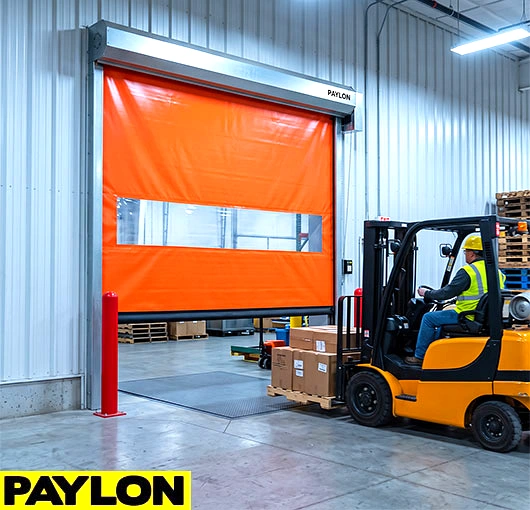
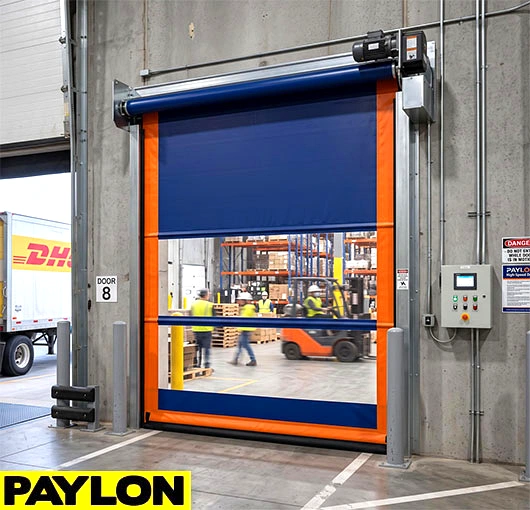
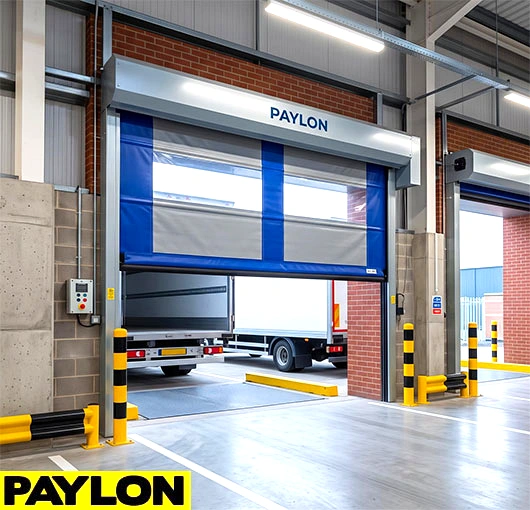
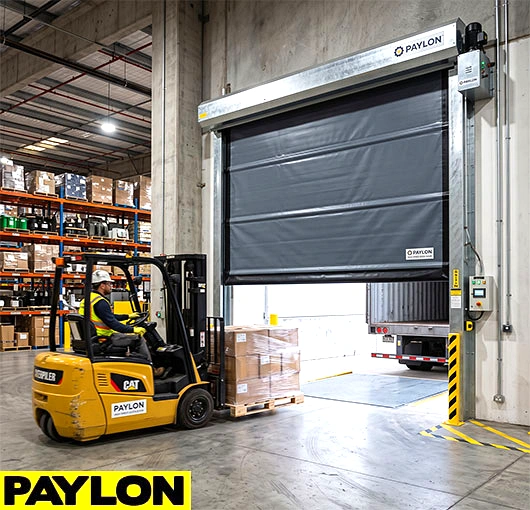
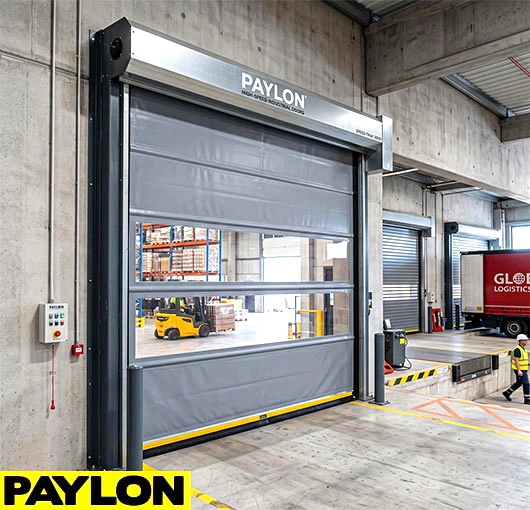
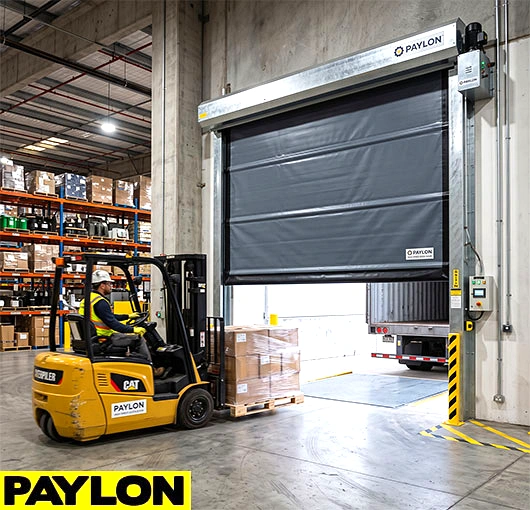
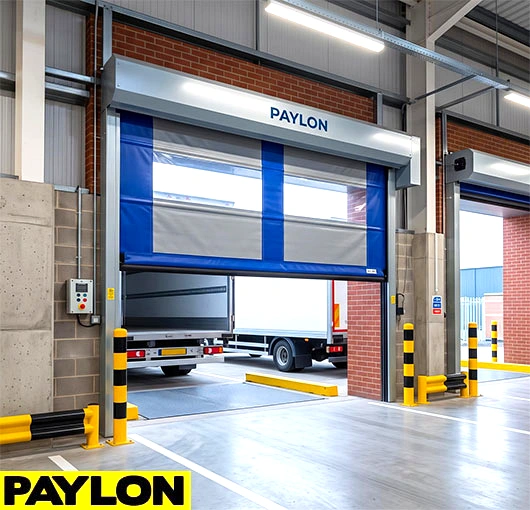
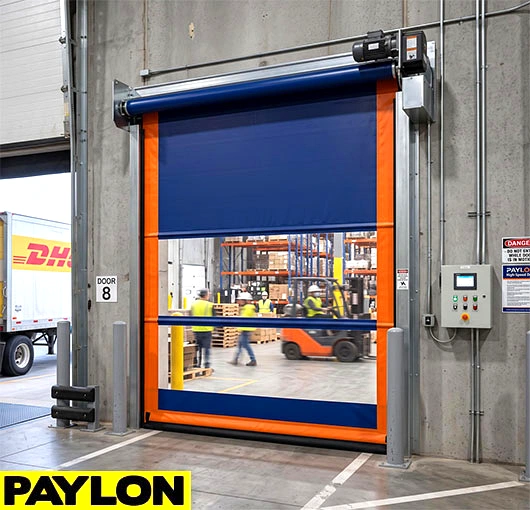
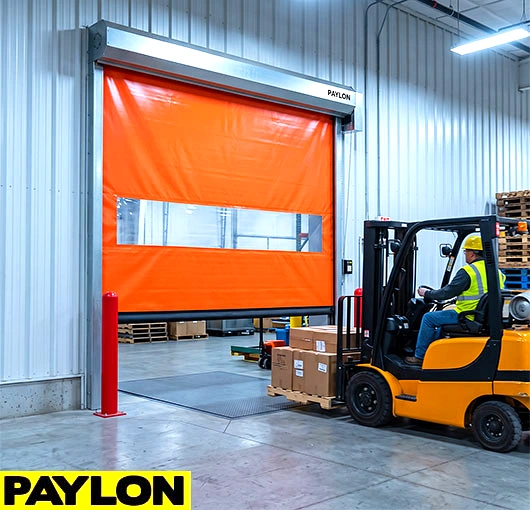
High Speed Dock Doors in Action
Conclusion
Speed is only worth paying for where the traffic earns it. On a quiet opening, a standard or manual door does the job. On a busy dock or a high-traffic interior wall, a high speed door pays you back in lower energy loss, cleaner air, and time saved on every pass.
Start with how often the opening is used, then match the speed, size, and safety features to that reality. Give us the traffic count, the opening size, and whether the door faces the weather, and we will help you spec a door that fits how your bay actually runs. We design, supply, and install high speed roll-up doors sized to the opening.
Choose Your Door Style
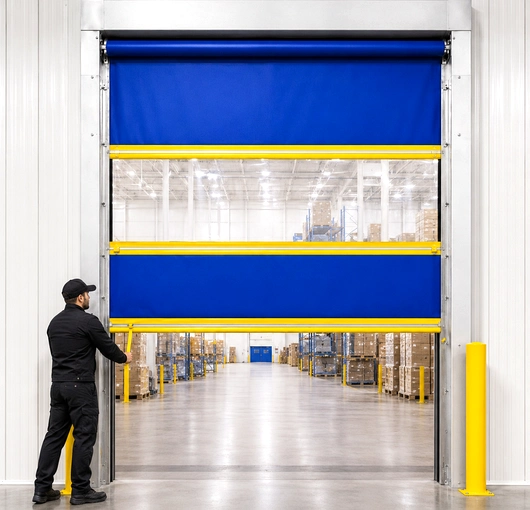
Manual | Man Power
Operation
Style #1 - Push-up / Pull Down
Style #2 - Chain Hoist
Available Options
- Metal Roll Cover
Limitations
- Opens from one side only
- Max Size - Push-Pull 12' x 12'
- Max Size - Chain Hoist 16' x 16'
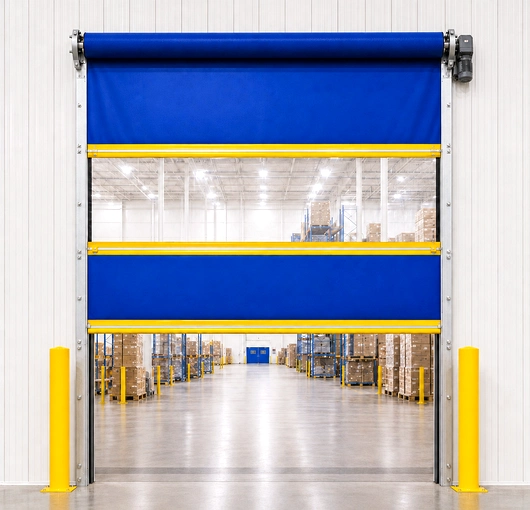
Motorized | Low Use
Operation
In-Tube Motor (Concealed)
Up-Speed 12"/Sec.
Available Options
- Metal Roll Cover
- Remote Control (With Receiver)
- Pull Cord Switches
Limitations
- Max Size - In-Tube Motor 16' x 16'

Motorized | High Use
Operation
Side Mounted Motor (RH or LH)
Up-Speed - 20", 30" or 50"/Sec.
Available Options
- Metal Roll Cover
- Remote Control
- Pull Cord Switches
- Motion Sensors
Limitations
- Max Size - 20' x 20' (And Up)
Contains: BlogPosting + Person + FAQPage + Organization JSON-LD.
Visible in editor only. Do not duplicate or edit manually.
About the Author
Dennis Fullerton is the Operations Manager at PAYLON Roll Up Doors. With over 15 years of experience in industrial roll up doors and dock high speed doors, Dennis oversees product development, technical specifications, and digital operations across the United States. He helps facilities teams match the right door to how their openings actually get used. Connect with Dennis on LinkedIn.