
Vinyl Doors in Active Care Areas
See how vinyl doors help health facilities maintain safe movement and control traffic in active care areas.
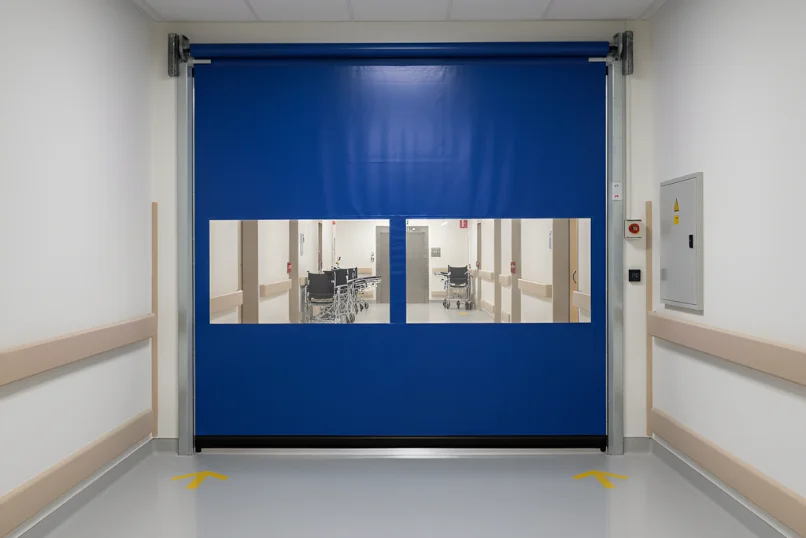
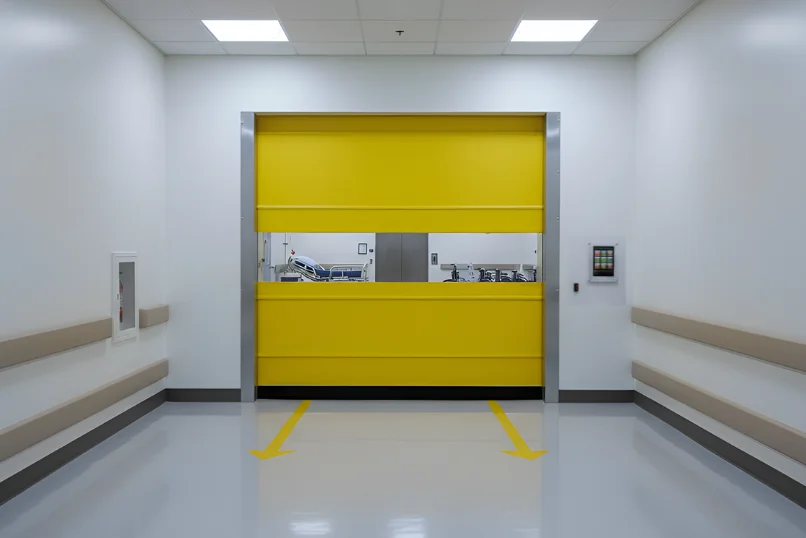
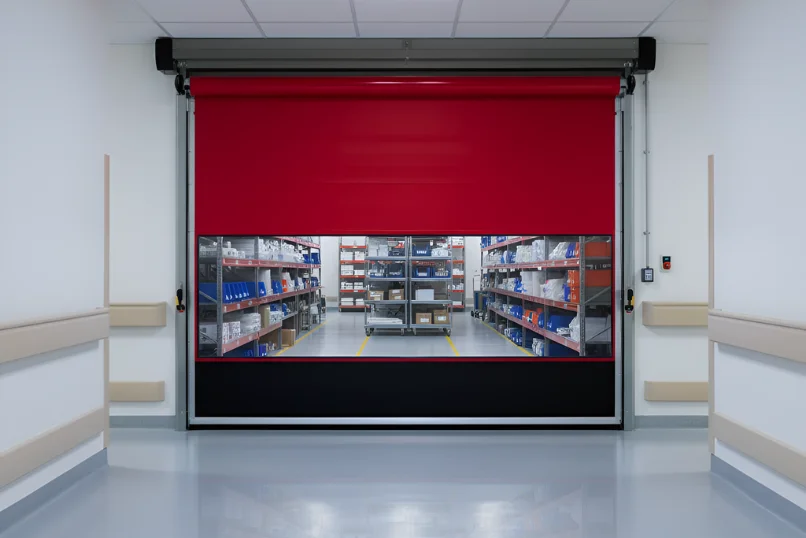
Active care areas depend on steady, uninterrupted movement, yet health facilities manage constant in-and-out traffic from staff, patients, and equipment. This article explores why safe movement matters, how vinyl doors support daily operations, where they are commonly used, and what options are available for different healthcare environments.
Best Roll-Up Vinyl Door for Busy Medical Facilities
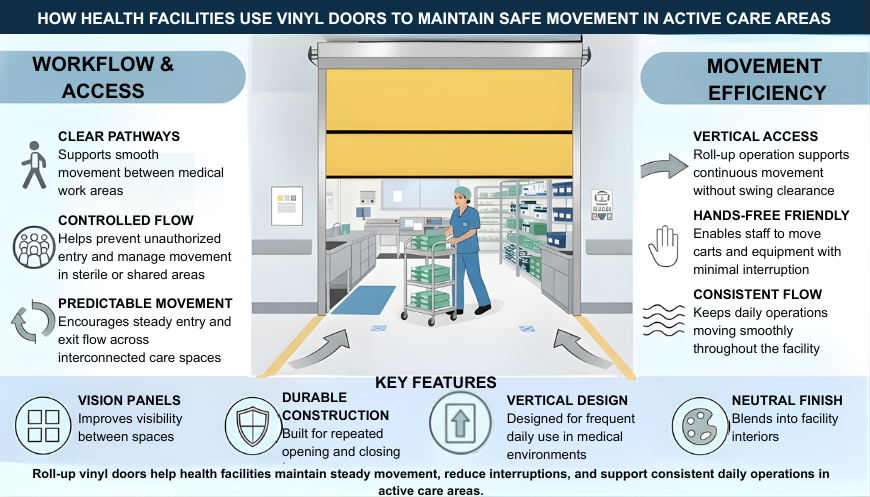
Health facilities rely on steady, uninterrupted movement to deliver care efficiently. Vinyl doors help support this flow by allowing staff, patients, and equipment to move safely through active care areas without unnecessary stopping points. By maintaining separation while reducing congestion, vinyl doors play an important role in keeping daily operations organized, controlled, and responsive to constant in-and-out activity across healthcare environments.
Why Safe Movement Is Critical in Active Care Areas
In health facilities, movement is not optional or occasional. It is a constant part of daily care. When people and equipment need to move quickly and predictably, even small interruptions can have wider effects on safety and efficiency.
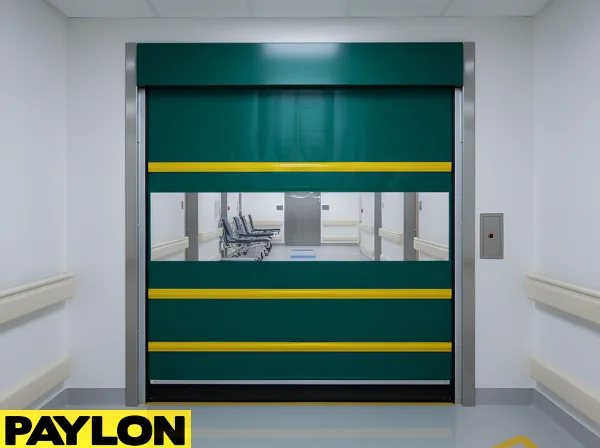
• Continuous staff movement supports timely patient care and coordination. When staff can move freely between rooms and departments, care tasks stay on schedule and communication remains efficient.
• Congestion and stopping points increase the risk of delays and errors. Crowded areas slow response times and create opportunities for missteps during busy periods.
• Equipment and carts require clear pathways to move safely. Medical equipment is often large or sensitive, making uninterrupted paths essential for safe transport.
• Traditional access points can interrupt established workflows. Doors that require stopping or maneuvering can break momentum in fast-paced care environments.
• Unpredictable movement adds strain during busy periods. When flow becomes inconsistent, staff must spend extra time navigating spaces instead of focusing on care.
When movement is difficult to manage, the effects ripple across active care areas. Clear, uninterrupted pathways help reduce friction, support staff focus, and maintain safer, more efficient daily operations in healthcare environments.
How Vinyl Doors Support Daily Movement Without Disruption
Once safe movement becomes a priority, health facilities need access points that support flow instead of interrupting it. Vinyl doors are commonly used because they allow staff, patients, and equipment to move through active care areas without unnecessary stopping points.
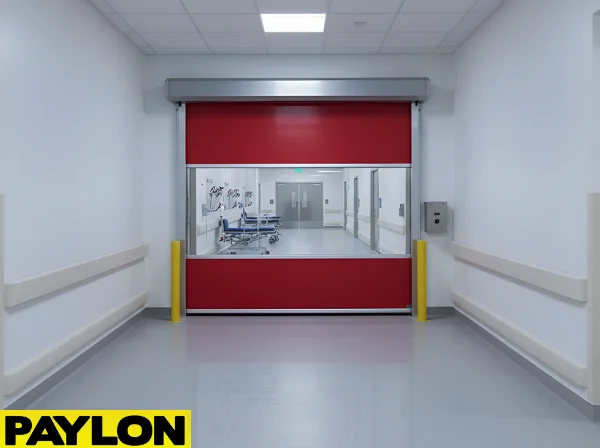
• Open and close without blocking walkways. Vinyl doors do not swing into corridors, which helps keep shared pathways clear during constant activity. This allows movement to continue smoothly without staff needing to pause or adjust their route.
• Support two-way movement during busy periods. Staff, carts, and equipment can pass through from either direction without waiting for clearance. This keeps activity moving evenly, even when multiple tasks are happening at once.
• Reduce hesitation, bottlenecks, and stopping points. Because access remains straightforward, people move with more confidence through transition areas. This helps prevent small slowdowns from turning into larger disruptions.
• Maintain separation without creating hard barriers. Vinyl doors help define spaces while still allowing quick access when needed. This balance supports control between areas without restricting daily movement.
By supporting steady movement while maintaining control between spaces, vinyl doors help health facilities manage daily activity without disruption. Their ability to keep access flexible makes them especially useful in areas where traffic patterns change throughout the day, leading naturally into where they are most commonly used.
Common Areas Where Health Facilities Use Vinyl Doors
Because daily activity levels vary across a health facility, vinyl doors are typically installed in areas where movement patterns change throughout the day. These doors are used at key access points where flexibility and control are needed without disrupting surrounding spaces.
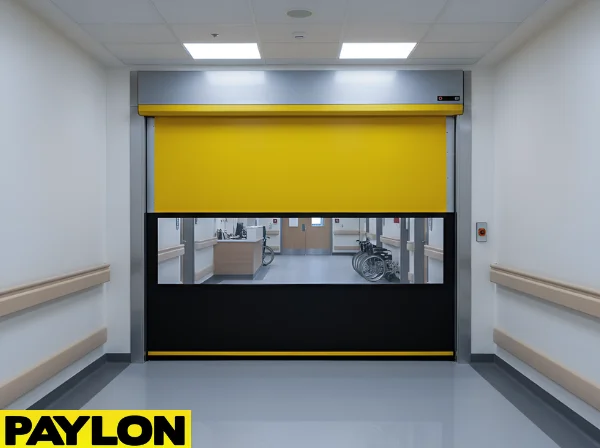
• High-traffic corridors and transition points. Vinyl doors are often placed between departments or care zones where people move frequently between spaces. These transition points benefit from access that adapts to constant flow without creating delays.
• Supply, service, and equipment access areas. Storage rooms, service corridors, and equipment pathways commonly use vinyl doors to support regular movement. These areas require access that accommodates carts and deliveries while maintaining separation from nearby spaces.
• Zones requiring flexible or temporary separation. Some areas need separation only during certain times or activities. Vinyl doors allow facilities to adjust access based on changing needs without permanent barriers.
• Areas with frequent in-and-out activity. Locations with repeated entry and exit throughout the day rely on access points that can keep pace with activity. Vinyl doors help these spaces stay organized and manageable as traffic increases or shifts.
By placing vinyl doors in the right locations, health facilities can support movement patterns that change throughout the day. Understanding where these doors are most commonly used helps clarify how they fit into broader facility operations and daily care environments.
Vinyl Door Options for Health Facility Applications
Once vinyl doors are placed in the appropriate areas, the next step is choosing the option that matches the level of activity at each access point. The table below outlines common vinyl door options and how they are typically applied in healthcare environments.
| Vinyl Door Type | Best Use Case | Traffic Level Supported | Movement Efficiency | Level of Access Control |
|---|---|---|---|---|
| Manual Vinyl Doors | Areas with occasional or scheduled access | Low to moderate | Basic, user-operated movement | Minimal |
| Motorized Vinyl Doors (Low-Use) | Locations needing consistent, assisted access | Moderate | Smooth and repeatable movement | Moderate |
| High-Speed Vinyl Doors | Areas with frequent, continuous activity | High | Fast, uninterrupted movement | Higher |
Understanding how vinyl door options differ makes it easier to match each access point with the right level of performance and control.
Frequently Asked Questions
FAQs About Vinyl Doors in Health Facilities
Are vinyl doors suitable for healthcare environments?
Yes. Vinyl doors are suitable for healthcare environments because they support controlled access while allowing consistent movement in active care areas.
Do vinyl doors help maintain clean zones in health facilities?
Yes. Vinyl doors help maintain clean zones by separating areas while still allowing staff and equipment to move in and out as needed.
Are vinyl doors safe for carts, stretchers, and medical equipment?
Yes. Vinyl doors are commonly used where carts, stretchers, and equipment need to pass through without tight maneuvering or frequent stopping.
How do vinyl doors handle frequent daily use in healthcare settings?
Vinyl doors are built for repeated operation, making them a practical option for areas with steady daily traffic.
Can vinyl doors be customized for different areas within a health facility?
Yes. Vinyl doors can be sized and configured to match different openings, traffic levels, and access needs across a facility.
Are vinyl doors appropriate for high-traffic healthcare corridors?
Yes. Vinyl doors are often used in high-traffic corridors where continuous movement needs to be supported without blocking shared pathways.
Do vinyl roll-up doors work well in transition areas between departments?
Yes. Vinyl roll-up doors are commonly installed between departments to manage movement while keeping access flexible during busy periods.
Can vinyl doors be used in temporary or changing care areas?
Yes. Vinyl doors are well suited for temporary or flexible separation when space use changes throughout the day.
Are vinyl doors easy for healthcare staff to use during busy shifts?
Yes. Vinyl doors are designed for straightforward operation, helping staff move efficiently during high-demand periods.
Do vinyl doors require special training to operate?
No. Most vinyl doors are simple to use and do not require extensive training for daily operation.
Can vinyl doors support both staff and patient movement?
Yes. Vinyl doors are used in areas where both staff and patients move regularly, helping maintain smooth access throughout care spaces.
Are vinyl doors suitable for service and supply access points?
Yes. Vinyl doors are frequently installed at service and supply access points where materials and equipment move throughout the day.
Do vinyl doors help reduce slowdowns at access points?
Yes. Vinyl doors allow smoother entry and exit, which helps limit delays caused by traditional access points.
Can vinyl doors adapt to different traffic patterns during the day?
Yes. Vinyl doors work well in areas where traffic levels increase and decrease depending on schedules and activity.
Are vinyl doors available with different levels of access control?
Yes. Vinyl doors are available in different operating options that support varying access control needs.
Do vinyl doors provide separation without permanent construction?
Yes. Vinyl doors offer separation when needed while remaining flexible and easier to adjust than permanent walls.
Can vinyl doors be installed in existing healthcare facilities?
Yes. Vinyl doors are commonly added to existing facilities because they do not require major structural changes.
Are vinyl doors suitable for both small and large openings?
Yes. Vinyl doors can be configured for a wide range of opening sizes, from compact service areas to larger transitions.
Do vinyl doors help facilities adapt to changing operational needs?
Yes. Vinyl doors support adaptability by allowing access points to change as workflows and space usage evolve.
How do health facilities decide which vinyl door option is best?
Health facilities typically choose vinyl doors based on traffic frequency, access requirements, and how each area is used throughout the day.
A Practical Approach to Movement Control
Managing movement in active care areas requires solutions that work quietly within daily operations. Vinyl doors provide health facilities with a flexible way to support access needs while keeping routines consistent and predictable. Because they adapt to different spaces and activity levels, vinyl doors are a practical option for facilities evaluating ways to improve movement control without adding unnecessary complexity.
Access Flow Inside Active Care Spaces
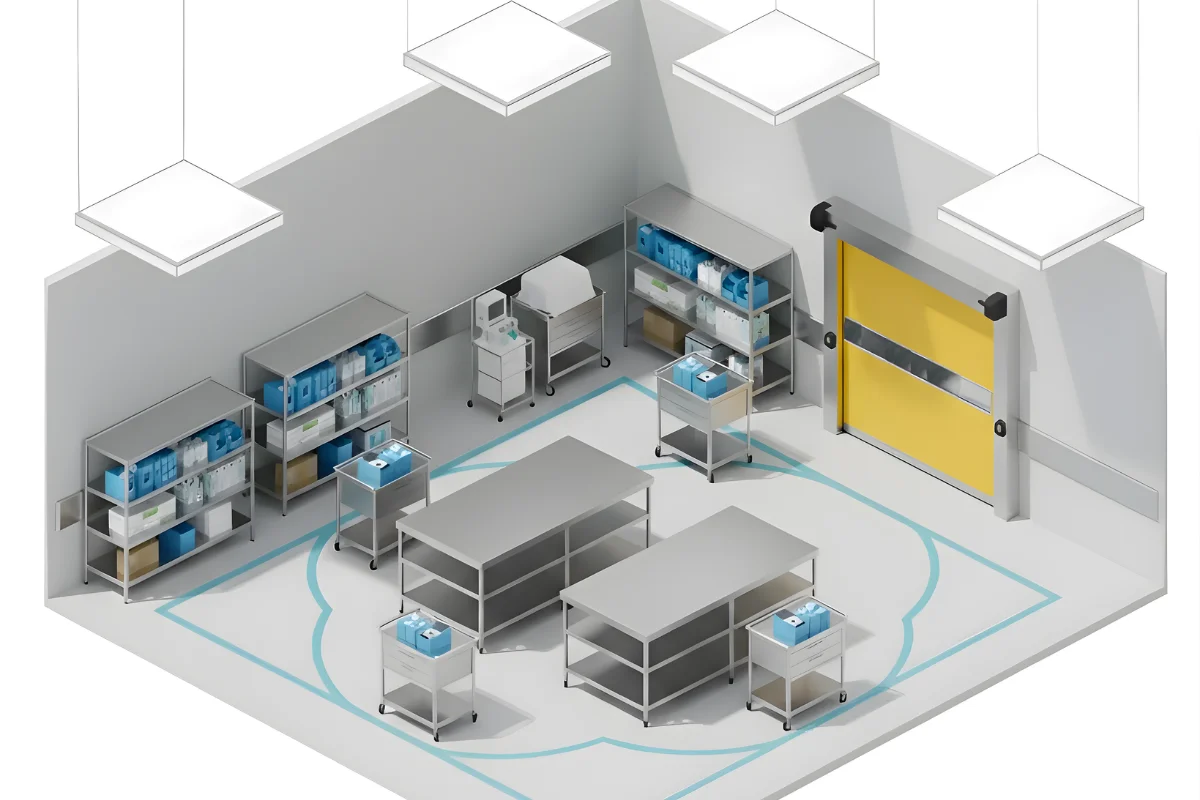
Photo Gallery