

Key Takeaways
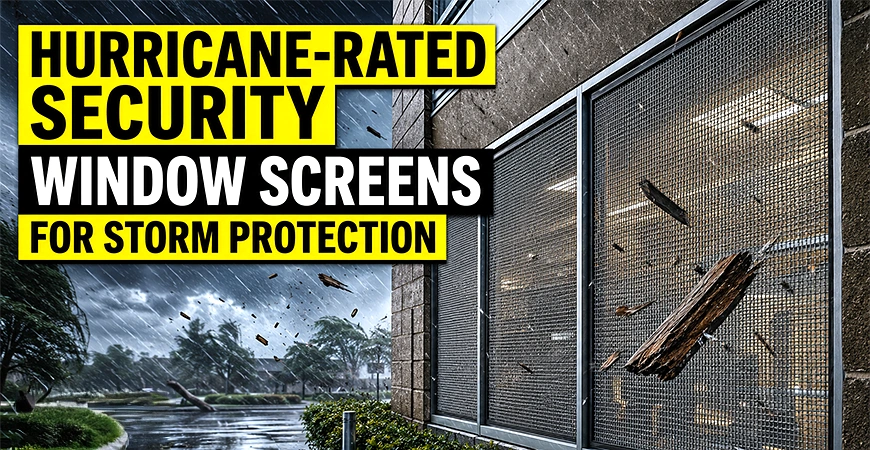
- Hurricane security window screens protect windows from windborne debris, storm damage and forced entry by utilizing woven 304-grade stainless steel mesh with low profile aluminum framing.
- These hurricane screens are designed for year-round protection, and remain in place before, throughout and after hurricane season without the hassle of installing plywood or deploying shutters.
- Fixed or operable egress models are available. Egress hurricane screens contain a panic bar and continuous hinge and are appropriate for emergency-exit apertures such as bedrooms and basement windows.
- These screens are a great choice for hurricane-prone areas that need proven storm protection, with Florida Building Code (FBC) HVHZ approval and Texas Department of Insurance (TDI) certification.
- Custom frame designs and colors let the screens blend with the building façade without the bulky, caged look of typical bars, grilles or storm shutters.
Just Like Bug Screens But STRONGER!

Why You Should Switch from Bars, Grilles and Plywood to Hurricane Security Screens Made of Stainless Steel
Stainless steel hurricane security screens protect windows against storm-driven debris, forced entry and everyday security hazards without impeding your view, airflow or natural light.
The standard approaches to securing windows have significant downsides. Grilles and bars can give a building a closed-off or institutional feel, which can be a turnoff for customers and reduce curb appeal. Plywood provides temporary storm protection, but it doesn’t give everyday security and has to be stored, labor intensive and installed ahead of every hurricane. Rolling shutters can be helpful during storms but when closed they impede natural light, vision and air flow.
Stainless steel hurricane security screens are a more realistic long-term solution. They stay in place year round, helping to secure your facility before, during and after hurricane season and providing a clean, professional look.


Affordable Hurricane Security Screens versus Metal Plates
Stainless steel hurricane security screens offer a more economical and practical solution for safeguarding vulnerable windows, compared to heavier and more expensive solutions like roll-up security barriers or metal plates. The mesh material installs faster, is less obtrusive, and is meant to give you year-round protection without having to set it up each season.
Stainless steel hurricane security screens reduce many of the trade-offs inherent in traditional storm protection. The woven 304-grade stainless steel mesh is tough enough to assist with defense against storm-driven debris and forced-entry attempts, yet has a clean look that seems only slightly darker than a normal insect screen from the outside. Natural light still goes through, airflow continues, and good view from inside is kept.
These screens can be left in place all year long not like plywood or removable storm panels. You won’t need to stockpile panels, plan installations before each storm or block off windows when hurricane season rolls around. Facilities are protected year-round from hurricanes, windborne debris, break-ins and vandalism without compromising the look or function of the structure.
The screens are dual-certified with Florida Building Code clearance for both HVHZ and non-HVHZ regions, Product clearance No. 16123-R5 and Texas Department of Insurance 3rd Party Evaluation No. FL-16123 . Also they are superior to all requirements of SMA 60001. One product that covers both hurricane protection and security can be used in storm-prone areas to eliminate the need to buy, store and deploy separate hurricane shutters each season.
Optional Swing Out Screens (Egress)


Egress Hurricane Security Screens Storm Protection with Emergency Exit Capability
Egress hurricane security screens offer the same storm-impact and forced-entry protection as fixed stainless steel screens, but can open quickly from the inside in an emergency.
How the Egress Mechanism Works
Each egress screen has a continuous hinge on one side and a panic bar on the other. In an emergency, the occupant just pushes the panic bar from the inside and the screen will swing open on its hinge so they can escape out the window opening. The screen swings shut and automatically re-locks when released. It can be installed quickly, no tools, no keys, no special training needed.
Frame Dimensions and Sizes
Egress screen frames are 3-3/4 inches wide and 2-13/16 inches deep (slightly larger than fixed frames to accommodate the hinge and panic bar hardware). The maximum screen size is the same as fixed models: 61 inches x 144 inches. The same custom shapes and frame colors are available.
When Egress Screens Are Required
Building codes in the U.S. require egress-capable windows in bedrooms, basements and other areas designated as emergency exits. When a window is used as an emergency escape route, the hurricane security screen on that window must also be an emergency escape. Do not use fixed screens in these locations. Many facilities use a combination of both options, with egress hurricane security screens on code-required emergency exit windows and fixed hurricane security screens on other vulnerable openings.


How Hurricane Security Screens Are Tested for Storm Impact
Every screen goes through rigorous forced-entry and hurricane impact testing before earning its certification.
Knife Shear Test
Simulates slashing and cutting attacks with a sharp blade. The woven stainless steel mesh resists cuts that would slice through aluminum or fiberglass screens instantly. This test evaluates the mesh's ability t o withstand the most common tool used in residential break-ins.
Impact Test
Simulates repeated forceful kicking and blunt-force strikes. The frame-to-mesh connection and mounting hardware must hold under sustained heavy impacts without separating or deforming enough to create an entry point.
Jimmy/Pry Test
Simulates tool-based pry attempts using crowbars and similar implements. The aluminum frame's mounting system and fastener pattern are designed to resist separation from the wall structure even under focused prying force at frame edges and corners.
Large Missile Hurricane Test
Simulates storm-driven projectiles (2x4 lumber at specified velocities) striking the screen at high speed. This is the same test required for Florida Building Code and Texas Department of Insurance hurricane certification. The screen must absorb the impact without the mesh or frame failing.
Fixed vs. Egress Security Screens: Side-by-Side Comparison
| Feature | Fixed Screen | Egress Screen |
|---|---|---|
| Emergency exit capability | ✗ | ✓ |
| Panic bar included | ✗ | ✓ |
| Hurricane rated (FBC and TDI) | ✓ | ✓ |
| 304-grade stainless steel mesh | ✓ | ✓ |
| Custom shapes (arch, round, etc.) | ✓ | ✓ |
| Frame width | 2-7/16 inches | 3-3/4 inches |
| Frame depth | 1-1/8 inches | 2-13/16 inches |
| Maximum size | 61 x 144 inches | 61 x 144 inches |
| No moving parts | ✓ | ✗ (hinge + panic bar) |
| Best for | Storefronts, lobbies, upper floors | Bedrooms, basements, code-required egress |
Tested and Certified Protection for Every Application

Fixed Window Security Screens: Permanent, Zero-Maintenance Protection
Fixed screens are permanently mounted and provide continuous protection with no moving parts, no mechanisms to service, and nothing for an intruder to manipulate.
Construction and Materials
Each fixed screen uses woven 304-grade stainless steel mesh secured in a high-strength aluminum frame. The frame attaches directly to the face of the wall around the window opening using tamper-resistant fasteners that anchor into the wall structure. This face-mounting method keeps the screen flush with the building exterior for a clean, low-profile appearance.
Frame Dimensions and Sizes
Fixed screen frames are just 2-7/16 inches wide and 1-1/8 inches deep, providing minimal visual impact. The maximum screen size is 61 inches x 144 inches. For larger openings, multiple screens install side by side. Custom shapes include arch, round, hexagon, polygon, and triangle configurations to match specialty window openings.
Best Applications for Fixed Screens
Fixed screens are the right choice for any window that does not require emergency egress: storefronts, lobbies, upper-floor windows, commercial display areas, government building perimeters, school corridors, and pharmacy inventory areas. Once installed, the screen requires zero maintenance and provides protection indefinitely.
Security Screen Features

See High-Security Window Screens in Action
Frequently Asked Questions About High-Security Window Screens
What is the maximum size for hurricane security screens?
Can hurricane screen mesh be a color other than black?
When should I use an egress hurricane screen instead of a fixed screen?
Are these screens approved for hurricane protection?
What frame colors are available for hurricane security screens?
Can hurricane security screens be made for custom-shaped windows?
Do hurricane security screens affect airflow or natural light?
How do hurricane security screens compare to plywood, shutters, or window bars?
Protect Storefronts From Riots

Storefront Hurricane Security Screens to Protect Against Storms and Debris
Stainless Steel Hurricane Security Screens provide 24/7 protection for retail stores, pharmacies, offices and commercial buildings from storm driven debris, hurricane winds and glass damage without the need to cover the facility in plywood or shutters.
Affordable Storefront Hurricane Protection
The woven 304-grade stainless steel mesh withstands repeated impacts from thrown objects, kicks, and pry attempts, and every screen passes forced-entry testing that simulates knife shear, blunt-force impact, and crowbar attacks. Unlike plywood boarding or rolling shutters, security screens stay mounted year-round. There is nothing to install before a threat arrives and nothing to store afterward. Your windows stay protected 24/7 whether an incident is expected or not.
Consistent Deployment & Greater Visibility
Business owners in coastal areas, storm-prone areas, downtown retail districts and commercial zones commonly prefer storefront hurricane security screens because they provide protection without obscuring the visual appeal of the building. The low-profile metal frame and black mesh provide view from inside the business, so staff can see outside, yet protect the glass from direct damage.
Meet Local Appearance Requirements
Many city zoning boards, downtown development authority, historic districts and mixed use areas prohibit exterior shutters, metal panels or bulky storm protection because of the industrial look they produce. These visual limitations might make it challenging for business owners to safeguard storefront windows while keeping a clean, inviting street-level appearance.
Stainless steel hurricane security screens eliminate this problem. To the passerby on the sidewalk, the fine-weave black mesh and slim aluminum frame look like a typical window screen, allowing businesses to maintain a professional, open image. Natural light still filters through, retail displays are still visible, and the outward appearance of the building is essentially unchanged.”
Stainless steel mesh screens are a viable choice for business owners wanting storm protection without the look of plywood, shutters or metal panels. They protect against the effects of storms, while yet allowing the building to be seen, attractive and functional for regular use.
Stainless Steel Security Screen Specifications at a Glance

Key Specifications
Stainless Steel Security Screen Specifications at a Glance
- Mesh material: Woven 304-grade stainless steel wire, always black for optimal clarity
- Frame material: High-strength powder-coated aluminum
- Fixed frame size: 2-7/16 inches wide x 1-1/8 inches deep
- Egress frame size: 3-3/4 inches wide x 2-13/16 inches deep
- Maximum screen size: 61 inches x 144 inches (both types)
- Standard frame colors: White, bronze, beige (custom colors available)
- Custom shapes: Arch, round, hexagon, polygon, triangle
- Hurricane approvals: FBC HVHZ/non-HVHZ (No. 16123-R5), TDI (No. FL-16123), exceeds SMA 60001
- Mounting: Face-mount with tamper-resistant fasteners
High-Security Window Screens: Fixed and Egress Models
Egress Compliant
Operable egress models include a continuous hinge and panic bar for emergency exit. Building codes require egress-capable screens on all bedroom and basement windows.
Low-Profile Design
The aluminum frame mounts flush to your building exterior. Fixed screen frames measure just 2-7/16 inches wide. The always-black mesh looks similar to a standard insect screen from outside.
Forced-Entry Rated
Woven 304-grade stainless steel mesh resists knife cuts, pry attacks, and repeated heavy impacts. The screens pass knife shear, impact, jimmy/pry, and large missile hurricane tests.
Hurricane Approved
Certified under Florida Building Code (FBC) HVHZ and non-HVHZ zones, Texas Department of Insurance (TDI), and exceeds SMA 60001 requirements for windborne debris protection.
Custom Made
Every screen is built to your exact opening dimensions. Standard rectangular, arch, round, hexagonal, polygon, and triangle shapes are all available with white, bronze, beige, or custom frame colors.
Conclusion
Stainless steel security screens give commercial and residential facilities a single product that handles both forced-entry protection and hurricane defense, without the visual drawbacks of bars, grilles, or plywood. The woven 304-grade stainless steel mesh passes knife shear, impact, pry, and large missile hurricane tests. The low-profile aluminum frame mounts flush to the building exterior and comes in standard or custom colors and shapes to match any architecture.
For facilities in hurricane zones, these screens eliminate the annual cycle of deploying and storing seasonal storm protection entirely. Fixed models provide permanent, zero-maintenance coverage on storefronts, lobbies, and upper floors. Egress models add a panic bar and hinge for code-compliant emergency exit on bedroom and basement windows. Both types install as complete kits with all mounting hardware included.
Contains: Product + FAQPage + Organization JSON-LD.
Visible in editor only. Do not duplicate or edit manually.